
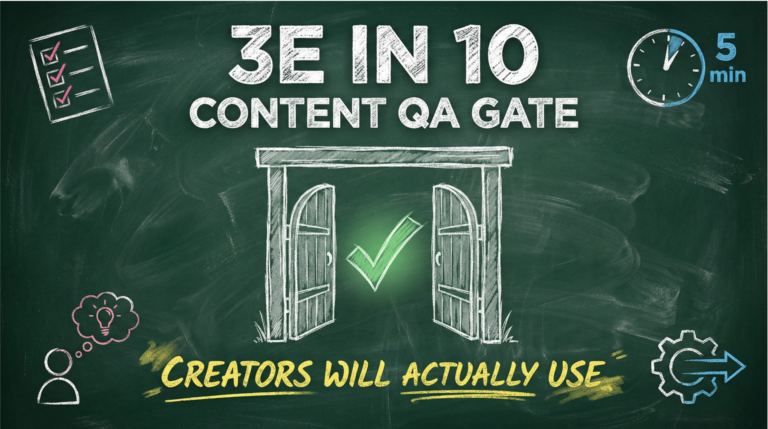

Most content errors do not reach production because of carelessness.
They reach production because the process was never designed to catch them.
A content team publishes an article. Minutes later, someone notices a broken embed and missing metadata. Publishing stops. Developers are pulled in to fix something that could have been caught earlier.
This is a familiar pattern. It is also a preventable one.
The fix is not a longer checklist. It is a focused review process that addresses the most common failures without adding friction to the workflow.
Why Content Errors Persist
Content teams review for accuracy and tone. That part usually works well.
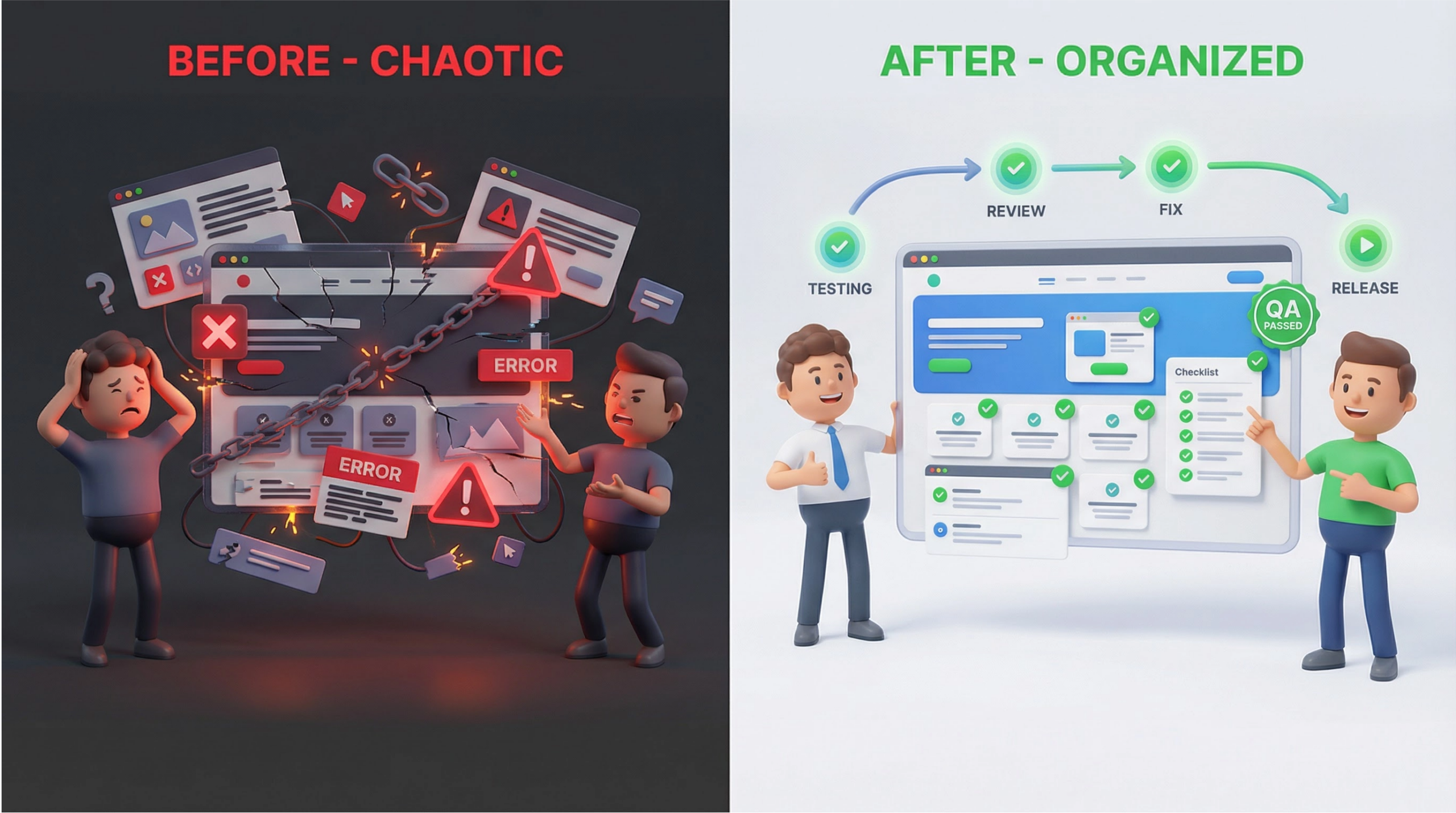
What gets missed are the technical checks. Broken embeds. Missing metadata. Layout issues on mobile. These are the errors that reach users and pull developers into reactive work.
When you look at these patterns through the lens of the 3E Framework, the impact becomes clear.
Audience Experience suffers when broken pages reduce trust. A user clicks an article and the video does not load. They leave.
Creator Experience suffers when teams rush to fix errors after launch. Confidence drops. Momentum slows.
Developer Experience suffers when engineering time is diverted to issues that should have been prevented. Time that could go toward roadmap work is spent firefighting.
The Root Cause Is Usually Simple
Two patterns drive most content errors into production.
The first is the absence of a lightweight QA step. Most publishing workflows simply do not include one.
The second is unclear ownership. When no one is specifically responsible for catching technical issues before publish, they slip through. Writers assume editors will catch them. Editors assume developers will flag them. Developers never see the content until it is live.
The result is predictable. Teams end up reacting instead of preventing.
Five Steps to a Focused QA Process
1. Define your top failure checks
Start by auditing recent posts. Identify the five to ten most common errors that required developer intervention.
Broken embeds. Missing metadata. Layout issues on mobile. Oversized images.
This short list becomes your focused QA checklist. It does not need to cover everything. It needs to cover the patterns that create the most friction.
2. Assign clear ownership
Someone needs to own the pre-publish check. It can rotate, but it must be documented in the workflow.
When ownership is clear, accountability follows naturally. When it is unclear, errors persist.
3. Add a fast pre-publish review
The review should take five minutes or less. Keep it focused.
Check that the featured image displays correctly on mobile. Verify all embeds load. Confirm metadata is complete.
A short, consistent step catches more issues than a long checklist that teams skip under pressure.
4. Build a feedback loop
When issues do slip through, capture them. Update the checklist. Share the pattern with the team.
This turns individual mistakes into system improvements. Over time, the process gets sharper without adding complexity.
5. Keep it accessible
Place the checklist where the work happens. Inside the CMS. Next to the publish button. Not buried in a shared drive.
Avoid jargon. Keep the language simple. If the checklist is hard to find or hard to understand, it will not get used.
What Changes When QA Becomes a Habit
The shift is quiet but meaningful.
Fewer errors reach production. Developer interruptions decrease. Content teams publish with more confidence.
Audience Experience improves because pages work as expected.
Creator Experience improves because teams spend less time fixing and more time creating.
Developer Experience improves because engineering time goes to planned work instead of reactive fixes.
When these three experiences align, the entire publishing operation becomes more stable.
Resilience Starts with the Small Steps
A structured QA process is not a major initiative. It is a small operational adjustment that prevents larger problems.
Define the checks. Assign ownership. Make the process fast and accessible. Build the feedback loop.
Small improvements in how content moves through your workflow create meaningful improvements in reliability, trust, and team confidence.
Where could a simple QA step reduce friction in your publishing process?