
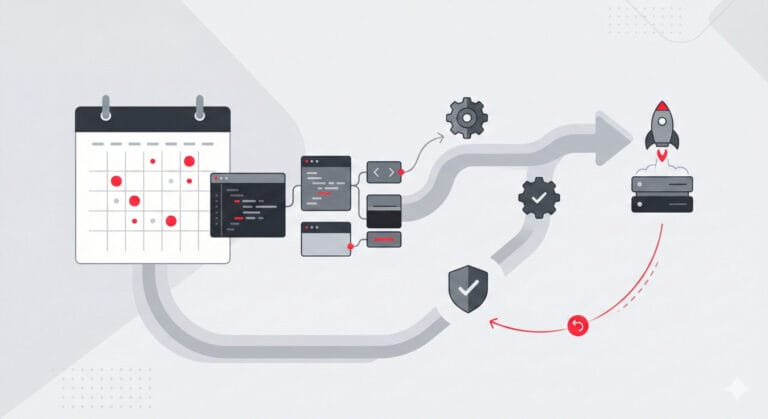

Most development teams do not fear deployments because releases are inherently risky. They fear deployments because releases have become unpredictable. When releases happen infrequently, they grow larger. When they grow larger, they become harder to manage. When they become harder to manage, teams deploy even less often. This cycle creates anxiety, slows delivery, and increases the chance of incidents.
Breaking this pattern requires discipline, not just better testing. Predictable releases come from smaller batches, regular schedules, tested rollback plans, and clear checklists. These practices reduce stress for developers, improve delivery speed, and create stability across the platform. More importantly, they directly impact business outcomes. Faster, safer deployments mean your team can respond to market opportunities, fix customer issues quickly, and maintain competitive advantage without the operational chaos that drains resources and morale.
The Problem with Large Releases
When teams bundle too many changes into a single deployment, troubleshooting becomes significantly harder. A release with ten changes creates immediate confusion when something breaks. Which change caused the issue? Was it the database migration? The frontend update? The API change? The more changes included, the longer it takes to identify the root cause, and the longer your platform remains unstable.
Smaller releases make debugging faster and reduce the blast radius of failures. Limiting releases to two or three changes at a time creates clarity. Teams can isolate issues quickly and restore stability faster. From a leadership perspective, this means fewer late night calls, reduced customer impact, and lower operational costs. The difference between a two hour incident and a twelve hour incident is often just the size of the release that caused it.
Irregular Release Schedules Create Anxiety
When teams deploy only when they feel ready, unpredictability grows. Developers hold back changes, waiting for the perfect moment. This leads to larger batches and more stress. It also creates bottlenecks that slow your entire roadmap. Features sit in staging for weeks. Bug fixes wait for the next “safe” window.
A regular release schedule removes this uncertainty. Whether the cadence is twice a week or three times a week, consistency matters more than frequency. Teams that deploy every Tuesday and Thursday know what to expect. They plan their work around these dates and treat deployments as routine, not high stakes events. For business leaders, this predictability means better planning, clearer timelines, and the ability to commit to delivery dates with confidence.
Rollback Plans Should Be Tested, Not Theoretical
Most teams claim they have a rollback plan. Few have ever tested it. When a deployment fails, scrambling to revert creates chaos and extends downtime. Every minute of downtime has a cost, whether measured in lost revenue, damaged reputation, or eroded customer trust.
A documented rollback plan should outline specific steps to return to the previous version. It should include who needs to be notified, which systems need attention, and how quickly the rollback can happen. Testing this plan in a staging environment ensures the team can execute it smoothly under pressure. This confidence translates directly into faster iteration and less conservative decision making around when and what to deploy.
Use a Release Checklist
Before every deployment, teams should run through a short checklist. This practice takes five minutes but prevents hours of firefighting. A good release checklist includes: What changes are included in this release? What is the rollback procedure? Who is available if something goes wrong? What monitoring is in place to detect issues?
This simple exercise creates clarity and reduces mistakes. It ensures the team is aligned before the release goes live. For leaders evaluating operational maturity, the presence or absence of this kind of discipline reveals how much risk your organization carries with every release.
Why This Matters for Platform Resilience
Predictable releases improve Developer Experience, which strengthens the entire platform. When deployments feel safe, teams ship faster. When teams ship faster, fixes and features reach users sooner. When users receive updates consistently, trust grows. This alignment between Developer Experience, Creator Experience, and Audience Experience is what platform resilience looks like in practice.
Teams that master predictable releases reduce incidents, improve velocity, and create room for strategic work instead of constant firefighting. From a business perspective, this means your engineering team spends more time building competitive advantages and less time responding to self inflicted wounds.
Moving Forward
If your team struggles with deployment anxiety, start small. Choose one improvement. Shrink your next release to three changes or fewer. Set a regular release schedule for the next month. Document and test your rollback plan. Build a release checklist.
The organizations that move fastest are not the ones that take the biggest risks. They are the ones that have made small, safe releases so routine that deployment becomes invisible. That invisibility is the goal. When releases stop being events and become rhythms, your platform becomes more resilient, your team becomes more productive, and your business becomes more responsive to customer needs.